A good recipe provides a starting point. Citrus, syrup, and temperature can still vary. Here's a simple way to figure out what the glass is actually missing.
Taste the drink once it has cooled and mixed. A lukewarm base before shaking does not tell you how the final serving will be.
It is sharp and too sour.
In a sour, you can try a small amount of the recipe's syrup. For example, start with ¼ teaspoon in one drink, mix, and taste again. This is a cautious experiment, not a new standard measure.
It's heavy and too sweet.
Try a small amount of the citrus juice already in the drink. If a large part of the balance has gone wrong, it is more manageable to start a new small portion than to pour more and more into the same glass.
It seems hot or alcohol-like.
Check the chilling and dilution first. Stir or shake as directed in the recipe. A spirit-infused cocktail should still taste like its base; extra syrup is not a panacea.
It tastes thin.
More sugar will not fix a watered-down drink. Look at the amounts, wet ice cream, and time until serving. A new batch with cold ingredients and correct measurements is often the best next step.
Same centiliter. Different sweetness.
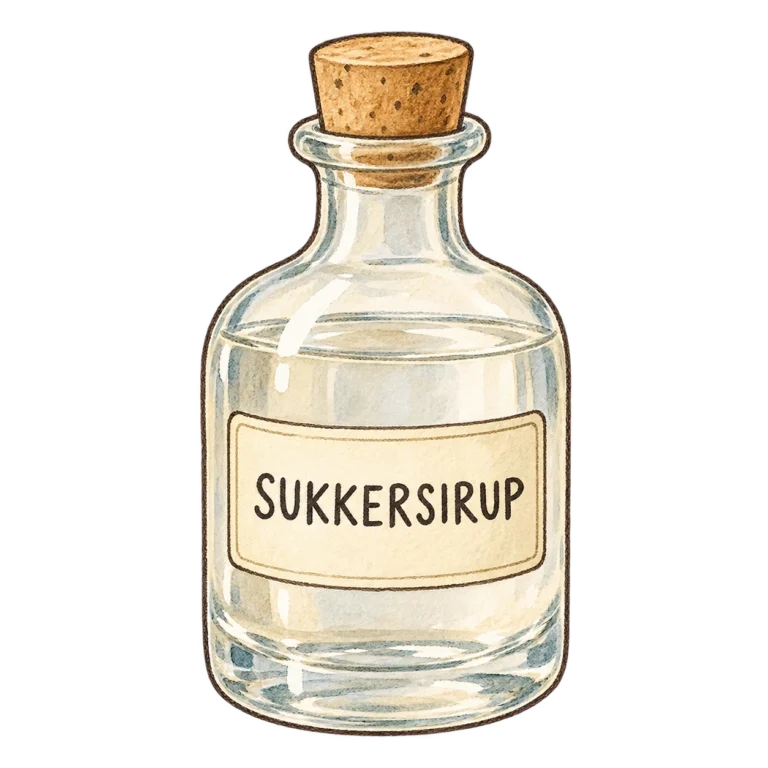
A syrup with 100 g sugar and 100 g water is not the same mixture as one with 175 g sugar and 100 ml water. In the book recipes we use the stated ratio and write it on the individual page.
If you use a different strength, you are changing both the sugar and the water, so it is too imprecise to simply swap 1 cl of one syrup for 1 cl of the other and expect the same balance.
Honey, agave and liqueur also add their own flavor. Use the recipe ingredient the first time. When you change it, make a small test and note the new amount.
Fresh citrus zest can add flavor without adding the acid you get from juice. Squeeze the zest over the surface when the recipe calls for it. A dried slice is decorative and aromatic in a different way; it is not a direct substitute for fresh zest oil.
Egg whites or aquafaba change the texture. Bubbles give a different feel again. Choose them because they suit the drink you want to make — not as an automatic garnish on every cocktail.
TRY IT YOURSELF
Two small samples. One change.
A · The starting point
Mix one drink correctly and divide it into two small, identical glasses. Taste the first sample without changing anything.
B · Your attempt
Add a very small amount of syrup to the second sample if you are testing sweetness. Compare at the same temperature. Try another change in a new pair of samples so you know what made the difference.
Note the drink, syrup strength, change, and what you preferred. It's your preference, not a given for everyone else.